Nutrition now and beyond : Breastfeeding Journey
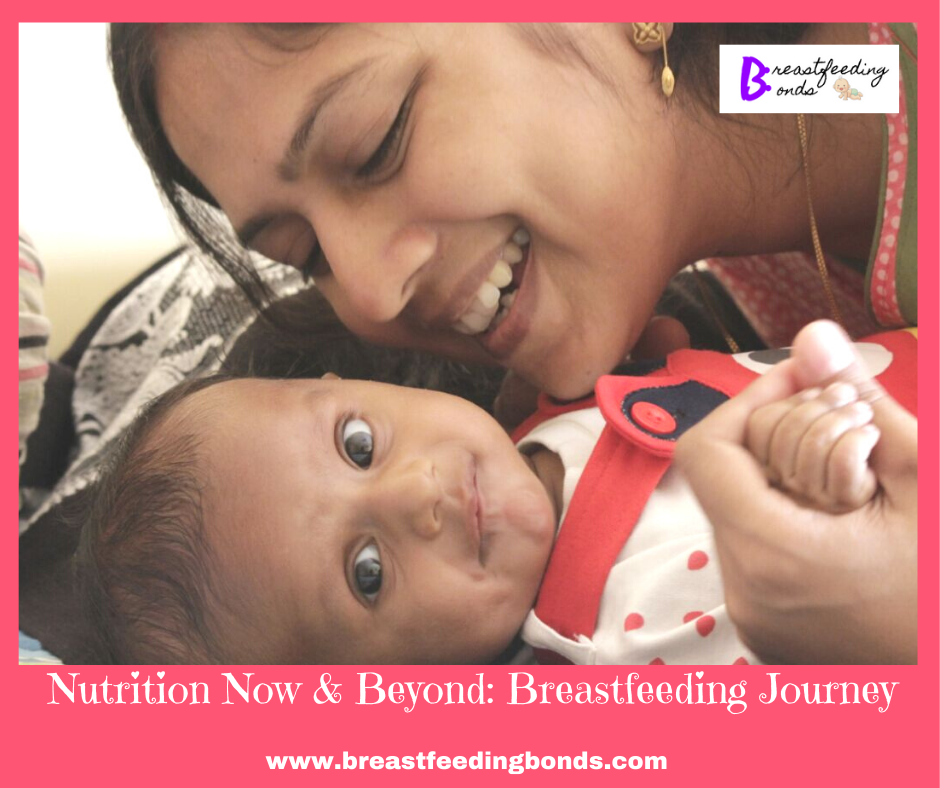
An MBA graduate, Sushmita Nandi, was born and brought up in Gujarat from where she went on to build her career and achieve new heights professionally. In 2013, she got married and moved to the US for a short stint. On return, they were in Pune for a year before shifting to Bangalore where she restarted her career. “The best part of my life began in October, 2016 when my daughter was born”, says Sushmita. 1. How ready were you to breastfeed? Honestly, I had no clue whatsoever. My gynecologist took it upon himself to educate me and even helped me understand the benefits of colostrum. I carried Ishvika for almost 41 weeks but this girl wasn’t ready to come out of me. My amniotic fluid level was low and she was going into distress. In spite of my hesitations, we went ahead with the doctor’s decision for a c-section. My breastfeeding journey began within the golden hour but I passed out due to exhaustion. When I regained consciousness, I was surrounded by a beaming father and excited set of grandparents. The doctor came on his rounds and asked me to feed Ishvika. I wasn’t confident and sure about where to begin but with guidance and support from the nurse and my mother-in-law, I made progress. I remember asking the nurse how can a big breast go into such a small mouth. The nurse smiled and assured me it will be alright. Although she did squeeze the areola too hard bringing out a small scream from me. 2. Minus the squeezing, that’s a good start. Would you describe the journey ahead as smooth? It was definitely not easy. I remember asking my husband to check if she had teeth because I felt her biting into my nipples. With time, we could manage the latch like a pro. We were a team. From day 1, on advice from my doctor, I fed her lying down and that I believe was the cherry on the cake. We did not have to touch the bottle. I am truly blessed to have the constant support from my husband and mother-in-law. They helped me sail through postpartum blues, aversions, sleepless nights, growth spurts, cluster feeding and so much more. It helped maintain my sanity. 3. Makes a positive difference when we have our family behind us. How was your healthcare team? They were equally supportive. During every visit, my gynaecologist and pediatrician would emphasise on the importance of breastfeeding and not giving water, honey, solids or any other milk for the first 6 months. Just breast milk. In fact, my gynecologist even pushed me to start mild exercises and walking when I was on the road to recovery. 4. You believe to have seen the benefits of breastfeeding. Tell us about it. Ishvika was an active child back then and achieved her milestones on time. She did not even fall ill till her first year. She was always a happy and cheerful baby, motivating me to continue breastfeeding her. The breastfeeding journey not only helped me shed those extra kilos that I gained during my pregnancy but I lost a few kilos more. Breastfeeding gave me a high and I always wore my smile. I miss those days for sure. 5. If you do not have the right kind of information, it is very easy to fall prey to myths. How did you manage to tackle them through 3 years? Yes, that is true. I was ignorant in the beginning and believed post 6 months, when the baby starts solids, she wouldn’t need breast milk. While my pediatrician asked me to feed atleast for a year, it was my gynaecologist who encouraged me to feed for a minimum of 2 years. And then there were myths that even sounded ridiculous for me to fall for it – give the 3 month old water or a paste of almond and dry dates for better health, to not nurse in public (NIP) and so much more. I think that was my cue to breastfeed all over the place – autos, trains, cars, flights, temples, during shopping, while roaming about on a vacation – the list is exhaustive. For my baby’s well-being, I started reading about breastfeeding, gathered advice from breastfeeding friends and eventually stumbled upon a Facebook group, Breastfeeding Support for Indian Mothers (BSIM). It is like a breastfeeding mother’s 4am friend. I am still a part of that group, learning every day. 6. Having lived in two countries now, how would you explain your NIP experience? In my opinion, NIP is still a taboo in India. The experience in India has been at extreme ends – I have been stared down on by men when I was nursing her in a temple. Yet, when I went to a tourist location in Jaipur, the security guard offered his chair so I could be comfortable. In Germany, initially I was hesitant when Ishvika asked to nurse in the park as I wasn’t aware of the NIP culture. I was pleasantly surprised that they were not just open but encouraging too. Made the experience smooth. 7. For how long did Ishvika breastfeed? She was actively breastfed for about 18-20 months post which she liked her solids better. The advices to wean began then. But she felt secured, attached and much more. So, I chose to ignore the advices as I wanted the end to this beautiful journey to be as tearless as possible. Also, when both of us were ready for it. We began the weaning process when she was 18-20 months old by dropping her day feeds. It took around 2-3 months by the time she fed only to nap. Eventually that dropped too when she went to kindergarten. However, the night feeds continued for another month before she started dropping that too. I was hoping to prolong the journey with just a few feeds but to my surprise one fine night, she weaned on her
How I fed my mother, Varunamma: Breastfeeding Journey

Mother to two little angels, Archana Sridharane is a corporate trainer, emcee, makeup artist and a Certified Hairstylist. She completed her Masters in Human Resources Management but emceeing had her heart and she did so for a few years now. She believes her education and exposure due to her job helps her be up to date with local happenings; a key strength to help her think on her feet. Archana has conducted sessions on personality development, soft skills, resume writing, interview skills, motivation and stress management across various schools, colleges and corporates. She was also crowned Mrs. Congeniality in the Mrs. Chennai beauty pageant, 2017. 1. Archana, it is very brave of you to come forward and share the most difficult part of your life. Thank you for doing so. To start off, tell us about your pregnancy. Everything about the pregnancy was normal up until my baby shower. On 18th April 2014, during my baby shower in my 9th month, everyone was talking about how dull and worn out my mother looked. I thought she was just exhausted. When I went home the next day, my father said, “Archuma, Amma has been diagnosed with advanced stage lymphoma and chemotherapy should be started immediately.” I went numb and hoped all this was just a cruel joke. We were all shattered. She was our world and everyone who knew her knew what a darling she was. My Amma could not even look into my eyes. 2. Go on. Biopsy was done followed by one round of chemotherapy. Three days later the effects began. Forgetting my pregnancy, I dedicated myself to taking care of her. Bathed her, cleaned up after her when she threw up, watched her cry in unbearable pain. She would say the roots of her hair were hurting and I was there helpless watching her bear it. All I could do was pray for God to ease her pain. On May 13th, I was extremely exhausted. I blamed it on pregnancy hormones and stress levels and kept going. Did not realise my water had broken. Amma was also in a lot of pain that day so there was no time to sit and analyse what could have been happening with me. On the 14th, we decided to give her IV fluids at home. At the same time, my contractions began too. I kept telling my baby, “not today kanna, my amma needs me.” It may sound selfish, but at that point the only thing that mattered was my Amma. 3. Was no other support available? At that point, it was difficult to find someone to come in at the last minute. My maternal grandmother and my elder sister-in-law were at home. Grandma was too old to be able to take care of my mother and my sister-in-law was pregnant too and as per customs we were not able to meet other. The worst thing ever is to watch your child suffer in front of your eyes and my grandma was already going through a lot. I started to feel something wasn’t right with me. I had to wake my mother up and she told me I was in labour. We booked a car and was heading downstairs. I turned to wave bye to my mother when she collapsed. We rushed back to pick her and left to the hospital together through terrible contractions. 4. What happened at the hospital? My mother was shifted to the ICU on the first floor and I, on the second floor, in the labour ward. My father kept shuttling between the two of us. All of this was just getting difficult to handle. I gave birth to my baby doll, Aadhira and Amma was recovering too. The doctors and nurses were supportive of breastfeeding and it also helped that I had seen my sister-in-law nurse her child. We were discharged the next day. Thankfully by then my husband and inlaws had arrived too. 5. How did it go at home with a newborn and having to attend to your mother? Amidst the chaos, stress and trauma, my little one breastfed like a champ. Everything was smooth with Aadhira. We did not really face any hard times with breastfeeding. I did not even have the time to stop to think. Just went with the flow. With Amma, the chemo sessions were working but the after effects were tearing her apart. It was one of those helpless days when I thought, “If breastmilk is considered liquid gold, I should give it to Amma!”. 6. Wow! Your presence of mind when in the deepest of pits is commendable. Did you give it to her? As a daughter, I would move mountains to give Amma whatever relief I could. With help from my grandma, I expressed milk and mixed it with Amma’s juices, health drinks and all other foods that she consumed. Nobody told her else she would have refused. Voila! It was working! She was starting to gain strength albeit rather slowly. Maybe 0.001% to 0.5%. But it was worth every bit. 7. This is hands down the best I have heard till date with respect to breastfeeding! Breast milk is truly magical. Go on. I continued to express and mix it in her food till August. On 22nd August, she was admitted to the ICU as her WBC count was reducing. We knew it was time. My father locked himself in the room. My brothers live abroad. They used to come alternatively during her chemotherapy sessions. Handling the whole situation all alone is unimaginable. One of them reached on the 24th. The turmoil in our heads and hearts was beyond words. Amma was upset with me for calling my brother to India. I informed her that her other son is on his way too (but he couldn’t make it on time). This was also the time I left Aadhira at home and formula was started. I was torn between the two but knowing these were
Second innings: Breastfeeding Journey
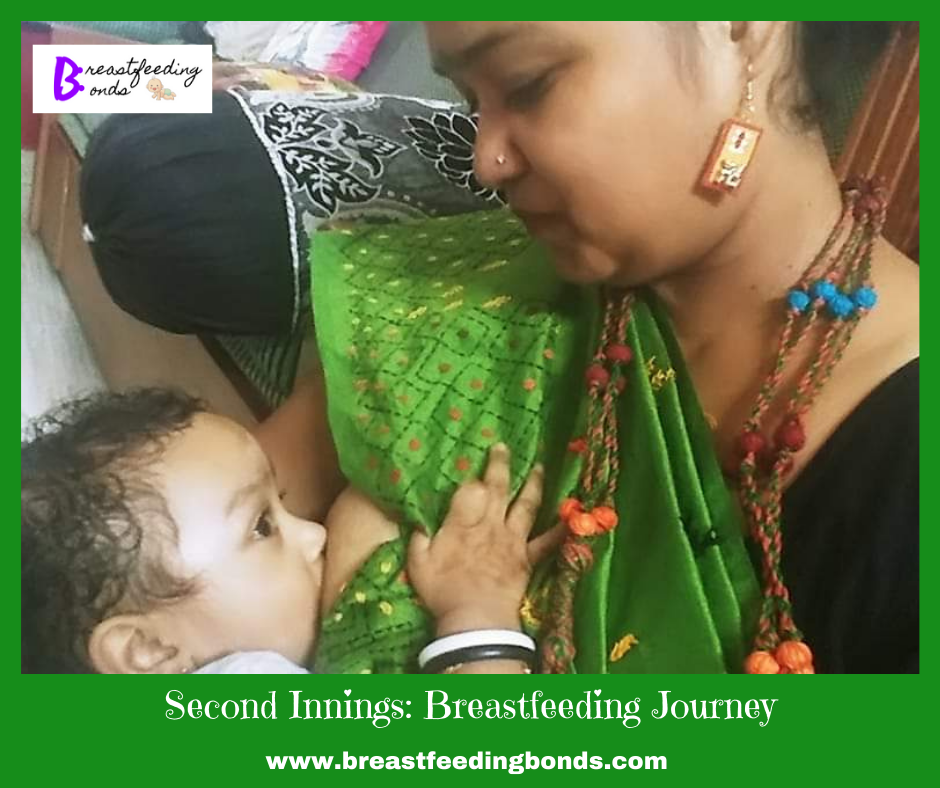
Akshaya Abilash, mother to three (2 humans and 1 fur) is a teacher by profession. She runs the Pune sling library for Live Love Babywear and is also a Customer Support Assistant with Bumpadum, India’s very own cloth diapering company. We interviewed Akshaya when she was nursing her baby around the 2-year mark and you can read about their journey here before they weaned. 1. Such a pleasure to have you back and to listen to your second journey. Your daughter was 16 months when we last spoke. How was breastfeeding through pregnancy? It was tough. I won’t lie. I battled severe nursing aversion and my daughter could sense my body changing. She latched even more which made it difficult for me to cope. I soon realised, with the help of peers and peer support groups, that the time I nurse her is the time I get to be with her; truly and wholly. That will help us bond much better and help reassure her that no matter what I’m will always be there for her, her Amma. Slowly things became easier and I could nurse through the dip in supply during pregnancy as well without an issue. Just when things seemed like it was falling in place, I lost my father. I was diagnosed with depression. Anti-depressants were prescribed and I was in therapy. Breastfeeding was the only thing that kept me going. 2. I am extremely sorry for your loss. A lot of people have mentioned being able to cope through breastfeeding. It isn’t enough but a little respite. You were a lot prepared the second time and was also able to get some of the crucial practices done. Yes, during my prenatal visits I did speak to my gynaecologist about skin-to-skin and breastfeeding within the golden hour, first hour post birth. In spite of a c-section at 37 weeks, we were able to get both done. But the first latch hurt. And all the consecutive latches hurt too. I watched a lot of videos and tried to correct the latch but was in pain. It took constant support from the nurses and the doctor, before we perfected the latch on the 7th day. It is true when they say no two journeys are the same – even if they are your own blood. 3. Was it smooth sailing once you got home? Oh yes. My son slept well so that let all of us catch up on some sleep and rest. For the first 10 days, I woke him up every 2 hours to ensure he was fed and back to his birth weight soon. Thereafter we continued to nurse on demand. During nursing sessions, my daughter gave us company by providing me with anything I would need for the baby or just keeping him entertained while he was at the breast. She did take her big sister role quite seriously. 4. How was your experience with tandem nursing? The first time around I was bombarded with myths from low supply to baby being addicted. This time well-wishers said I wouldn’t make enough for two or the older one would finish it up leaving nothing for the newborn. And then I think I zoned out. It was magical the first time it happened. I cried tears of joy as my children held hands while tandem nursing. It felt surreal that my body was capable of doing this but yet here I was doing it! I knew better. More aware. Was easy to stand up for both my kids and I. Even today, they talk about having nursed together. Beautiful, ain’t it 5. Anirvan did have a few health scares in between. How were you able to keep calm through it? When he was barely a year old, Anirvan fractured his hand. Seeing his little hand all plastered and tied was heartbreaking but breastfeeding helped calm both our nerves. At 18 months, he caught pneumonia and hospitalisation was required. The only way to calm him and make him sleep through all the needle pokes was to breastfeed. Due to the illness, he had barely eaten for 5 straight days and was surviving on saline and breast milk. He did not lose even 1kg of weight and the doctors and nurses were impressed. They praised me for breastfeeding for that long as it helped to fight the infection better and bounce back to his usual self, sooner. 6. Can you describe the weaning process and experience with both children? Aashrita was weaned at 2.5 years and Anirvan at 2 years. They were both weaned gently and gradually. Aashrita and I slowly found other ways to bond and she found new ways to comfort herself, especially cuddling together. She started demanding lesser feeds and I followed her cues. We spoke about how she enjoys eating a variety of different foods so she doesn’t need to nurse anymore. She slowly weaned and didn’t ask to nurse. It was heart-breaking for me as well but felt it was in her best interest. She was okay watching her brother nurse. Joined us with her dolls and pretended to nurse them saying, “I’m like amma. I give nene to my dolls.” We had a rocky start but the journey was nothing but beautiful. 7. Your suggestion for second-time mommas. If you do choose to tandem, know that it isn’t easy but like with everything related to parenting, very rewarding. Always remember that you are doing whatever is best for your babies and you’re the best mother they can have.
Un-trapping the Formula trap: Breastfeeding Journey
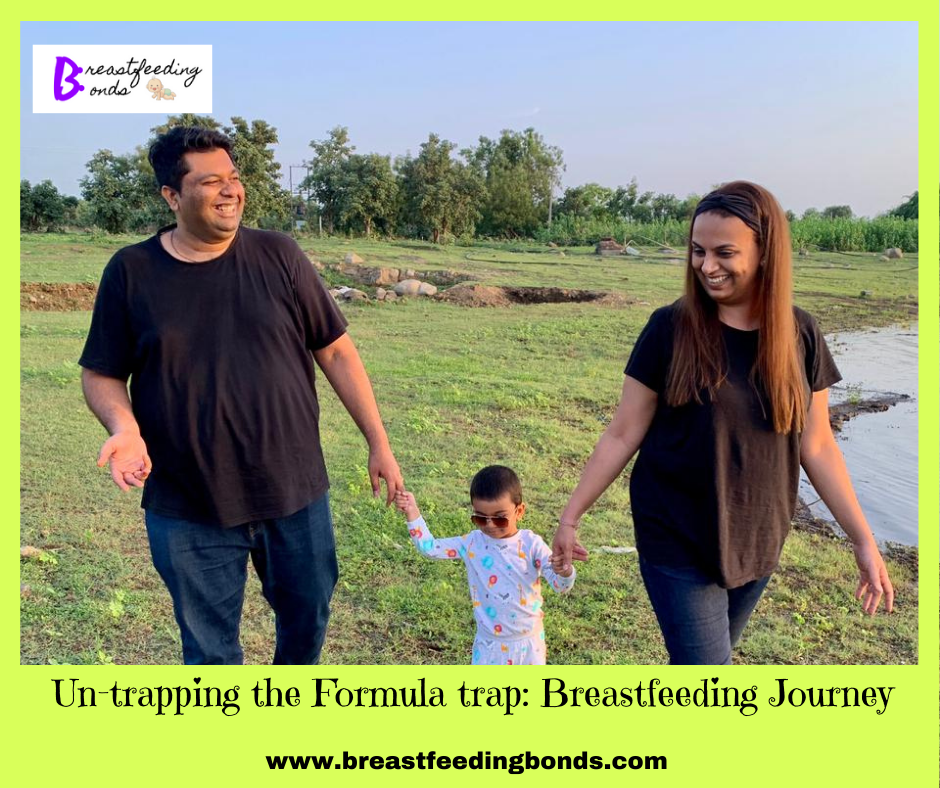
We all know Rubeka as the make-up queen! Rubeka Almalik completed her masters in Hotel Management and worked as an Assistant Professor in the same college in Nagpur. A foodie and traveller, she says, “I hate the lockdown because I cannot wear makeup, travel and gorge on some yummy authentic local food.” Post her wedding to a wonderful guy from Goa, they made the most adorable baby together and named him Avan. 1. Mothers who have given birth via c-section are often made to believe they don’t have milk till 5th and sometimes the 7th day too. You gave birth via an emergency c-section, before due date. What happened then? My water had started leaking slowly 3 weeks before the due date. I was induced but did not dilate more than 4cms even after 18 hours. The baby’s heartbeat began to drop and a c-section was recommended. When it came to breastfeeding – I had no clue. I just went with the flow. I didn’t even realise it was something I had to prepare for. Wasn’t it supposed to just happen naturally? Or, the doctors and nurses will definitely help me. Breaks my heart even today. Forget consent, he was started on formula without any of us being informed. The only minute silver lining at that point was they fed him via spoon and not a bottle because we did not carry one due to the last-minute change in plan. 2. What happened when you regained consciousness after 6-7 hours post birth? I started direct nursing from the next day. The Lactation Consultant at the hospital explained what the nipple and areola were and that I was to latch the baby onto the areola. She suddenly squeezed the life out of just my nipple and declared I did not have enough milk. So, the formula continued. Sitting up hurt a lot and at one point, don’t ask me how, the stitches came apart from the corner. After going home, I bore the pain and continued to nurse him but totally unaware of what cluster feeding or growth spurts was, I formula fed him through that time. Thus, completely into the formula trap. 3. I am so sorry Rubeka. All that ill information around breastfeeding is devastating. I wish I could say it ended there. On the 50th day, post birth, I had to undergo a surgery for piles. That phase was the toughest. The anaesthesia hit me hard – the backache, headache, antibiotics and painkillers – my supply was hampered. Breastfeeding sessions went down. I was helpless and gave in. But like they say, once you start going down, you hit rock bottom before climbing back again. 4. Sounds promising. Tell us more. It was my baby’s vaccination and we went to visit my pediatrician in another city. That’s right. The one who saved me from the last stage of pneumonia when I was 2.5 months old. He asked for the spoon feeder and formula. I handed it over assuming he was going to show me something I wasn’t aware of. Within a blink of an eye, all of it went flying into the dustbin. He warned us, “Don’t you dare give him this or I will throw you all out of the cabin.” It may sound rude to a lot but I think I needed the jolt. It worked for me. 5. Yes, when so much is happening, we tend to forget what we are capable of. How was the journey then?He gave me medicines to help boost my supply and asked me to latch every time the baby demanded. Drastic weaning of the formula led to dehydration and we had to restart formula for Avan. Then, based on my assumption and watching the baby, I began reducing formula slowly. Couple of weeks later, the baby was done with formula and exclusively direct breastfeeding. I came to know about Breastfeeding Support for Indian Mothers (BSIM) when Avan was 6 months old. I wish I knew of them earlier. Nevertheless, they validated my weaning process and hand held us through all the phases – sleep deprivation, low supply, cluster feeding, rejections, aversions, growth spurts and so much more. They gave me the confidence that I did not go wrong with my decision to wean off formula. They are the reason I could give it one last shot – and make it work too and how! At 2.5 years, we are having the best breastfeeding journey. 6. All those struggles would have definitely aggravated with all the judgement. How did you manage? It was tough to handle those relatives who used to tell me I wasn’t making enough and starving my poor baby. There was apparently no glow on his face due to dehydration and many more unsolicited statements, judgements and advices. BSIM taught me patience and tolerance. My son’s progress assured me that we are going to fight this battle together and come out with flying colors. At 7 months, he stood with support and without support at 8 months. He took his first step at 10.5 months, all by himself. I understand every baby meets their milestones when they are ready for it, but my son helped shut all those mouths. 7. And just when everything seemed to have fit right like the pieces of a puzzle, your family contracted Covid. How did you handle breastfeeding then in a nuclear setup? On day one at my hospital job as a LC, I had contracted Covid. It started with high grade fever and like I was advising everyone on BSIM, I continued to nurse Avan. My husband was handling the rest of it for 2 days when he started a fever. My gut feeling told me it was Covid and the tests came back positive. My husband and son’s reports came back positive too. Thanks to FITTR, we were able to maintain a healthy diet and workout for 5-10 minutes every day. It made a difference. Avan was on
Giving it my last shot: Breastfeeding Journey
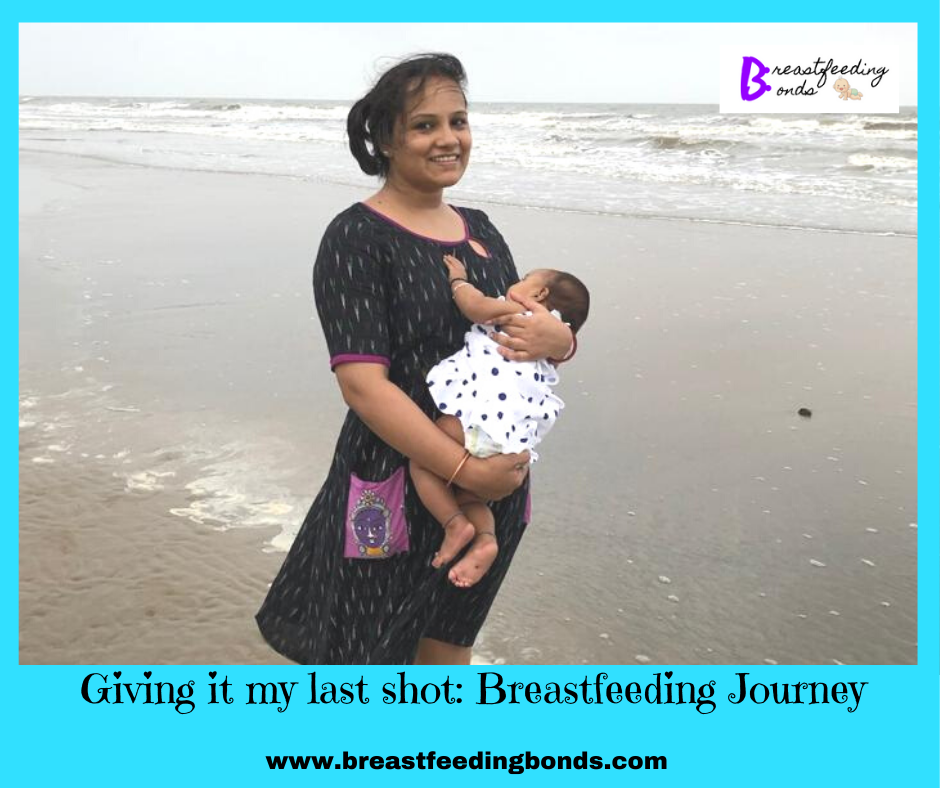
Born and brought up in a small town in Bangalore, Snigdha Majumdar’s education took her to a couple of cities around the country before she settled in Bangalore with her first job. The city also became home from the first day at work, the day she met her partner too. In the 10 years together, they travelled a lot, got married, bought a car and moved into their own house. Then they took a pause with a dream to extend their family and welcoming Meera into their lives in 2019. 1. With the thought that breastfeeding happens naturally, a lot of folks tend to skip prenatal classes. But you did. What did you think of it? Yes, I attended a session arranged by the hospital and when they emphasised on breastfeeding and its importance, I kept thinking why does this require a session. I did not see anyone breastfeed in the family or friend’s circle but shouldn’t it be the only way? Apart from the sessions, I was asked by a friend to keep my nipples soft using coconut oil. The gynaecologist said I have flat nipples so I should keep massaging it. Some friends asked to keep a pump in the hospital bag which I did not because I had plans of direct feeding. 2. The WHO recommends nursing within the golden hour – first hour post birth. Did it happen for you? Yes! I was checked by the nurses. They said I was getting colostrum and immediately got the baby to latch. Due to flat nipples, they said a lot of massaging was required and also suggested using syringes to pull it out. Challenges began from the 4th or 5th session. She kept crying inconsolably, unable to latch, breaking my confidence. The Lactation Consultant (LC) at the hospital suggested using a nipple shield. They even gave us a pump to express milk and feed Meera. 3. Did it get better with the nipple shield once back home? Till date, since Meera was born, the first night at home was the worst! It was the month of January and the temperature at home wasn’t controlled. She just wasn’t able to latch and I had to express and feed her. Leaking breasts, a crying baby and all the chaos around made me extremely uncomfortable. From the next day, we slowly started getting used to the nipple shield but it was always a hit and miss. Some sessions were okay and some were not. We even bought a pump and bottle to give her formula. 4. The first day at home has gotten to lot of us so I understand how it must have been for you. What happened next? Well, Meera was fed expressed milk via bottle. She was getting enough except for those one-off days when my supply couldn’t meet her demand. In the entire week, she was given formula 3-4 times. I couldn’t get the timing right and she would be extremely hungry yet cranky at the breast. It was difficult to calm her to take the breast. 5. What possibly seemed like the way forward, suddenly wasn’t. The difficult phase did not end there. Like they say, when it rains it pours. I joined the facebook group, Breastfeeding Support for Indian Mothers (BSIM) on the 10th day. I realised a lot of it shouldn’t have happened – pumping so early and introducing the bottle to Meera. But it was late already (or so I thought!). All that pumping led to over production. When Meera turned a month old, we had stepped out for lunch. After all that was happening, it was a welcome change. But what followed was craziness. When we were out, I did not nurse or pump for a good 3-4 hours. It started with a severe headache and by the time I got home I had high grade fever. I expressed and fed Meera but the fever wasn’t budging. Being a Sunday, my doctor was unavailable and I was asked to go into the hospital emergency. Thanks to clogged ducts, I was sent home with a big list of medications. Things got better in 2-3 days but I realised all this nipple shield feeding, pumping and sterilising is not working for us. That was the day I found you on BSIM. 6. It has been 2 years but I still remember that day clearly. But for the benefit of our readers, you will need to elaborate.Till this day, I cannot thank my stars enough for having met you. Meera was in her 6th week when Sapna came home. She gave me the much-required confidence. She just took off the nipple shield and made the baby nurse. Meera was very co-operative too. I was pleasantly surprised that it was that easy. In that hour, Sapna helped me latch her on both sides to make sure I was doing it right as I had an over active letdown too due to the pumping. And then we did another round of latching on both sides with Sapna just watching and not stepping in to help so I could trust myself to do this. 7. You both were wonderful, learnt the latch on the word-go. And yes, all of this was possible because Meera let us. What happened after I left? In the next 2-3 weeks, I gradually weaned Meera off the bottle. We kept practising and Meera supported me. Fast forward to 28 months, we are still breastfeeding. In the past 2 years, we managed to move to exclusive breastfeeding, nursed through dengue while I was on drips and even created a stash when I went back to work before the pandemic. 8. Do you have a plan on when you would be weaning her? No way! I plan to let her self-wean. In fact, it was not even a possibility when the initial phase of covid vaccinations did not include lactating mothers. Meera herself has reduced her feeds to nights and early mornings. Just to
Elixir on Earth: Breastfeeding Journey

A post graduate from IIM Calcutta, Mrunmayee has been working with an IT firm for a decade now. She is passionate about her work and family and loves to plan trips and organize events. In her free time, she explores different restaurants, art work and places to travel. Wife to an always supportive partner, Amit, they have a 2.5 years old daughter, Pranmaya. 1. Mrunmayee, tell us about the days that lead up to Pranmaya’s birth. It was quite a dramatic start. In June 2019, we were on a trekking outing when I felt this excruciating pain in the abdomen. Since we were in the planning-a-baby phase, we rushed to the doctor. The sonography showed a tubal pregnancy that had to be removed but the doctor was not convinced. She recommended us to another radiologist where the sonography was to be repeated after 12 hours. Voila! No traces of a tubal pregnancy but the HCG levels were high. Another blood test a week later confirmed the pregnancy and a sonography two weeks later detected the baby’s cardiac activity. Now that I was pregnant, it was business as usual – as for some pregnant women, up until 4 months. Due to a short cervix, a cervical cerclage was done and bedrest was ordered for the rest of the pregnancy. This was accompanied with Gestational Diabetes and strict diet restrictions. My maternal grandmother and mother-in-law have been supportive of breastfeeding and suggested food items that could help me make enough milk for my baby. 2. Phew! Tell us about the birth and baby’s first latch. On the D-day, my water broke at 2:30am and we rushed to the hospital to be told I was dilated only 2cm. Baby’s cardiac activity was being monitored continuously. Post 14 hours of induced labour and epidural, I was at 7cm dilation. Six hours later, the baby’s heartbeat dropped to 60 and I was wheeled in for a c-section. Thankfully, I was aware and had spoke to my doctor regarding delayed cord clamping and skin to skin and breastfeeding within the golden hour. And I got it all. She was on me nursing like a pro giving me a taste of how our breastfeeding journey is going to be ahead. 3. Beautiful! Was it a sweet taste? For the most of it, yes. Both the mothers were thrilled to hear the baby latched and drank tummy full. Back then, I did not understand the excitement around it. At the hospital, I struggled with oversupply – leaking and engorged breasts with unbearable pain. The Lactation Consultant offered me two approaches – hand express and regulate the supply OR pump and donate to the milk bank. I made up my mind. 4. What was the decision? To donate. Till Pranmaya turned 9 months, I pumped regularly and donated close to 10 litres of breast milk. With the milk that was not stored properly or could get spoilt, I made soaps and bathed her with it. If she would take expressed milk, I would have considered it but she just refused. 5. This is amazing! Thank you for making a difference in so many lives. You mentioned that the journey wasn’t sweet a few times. Tell us more about it. Honestly, there were times I really wanted to give up – colic, gas trouble, cluster feeds, sleepless nights, blisters, growth spurts, teething and most recently post the vaccination. Gosh, that list is basically saying I wanted to give up every 2 weeks, sigh! If it weren’t for my husband, both mothers and maternal grandma, I would have actually given up. Every time she cried, they would tell me it is not for milk. Pranamya just needs to be held, loved and cared for and in between she may want to nurse for comfort. I was fed for 2+ years, my husband and his siblings for 4 years and my mother and her siblings for 3-4 years. With such a strong force behind me, no roadblock was difficult to overcome. I am also part of Breastfeeding Support for Indian Mothers (BSIM), a facebook group. The group has been a saviour when I needed the extra push. 6. Wow, a dream team indeed! So, does that mean you were not subjected to any myths or weaning advices? Of course, I was. The society never stops in spite of the dream team behind me. I was asked to be on a restricted diet to prevent gas trouble in my baby; was told supply will decrease when I went back to work; left breast has thin milk and right has thick milk; stop nursing after baby turns 1; most importantly to not nurse in public … and I have forgotten the rest. There was no way I was going to work on these advices. My husband and I were clear. We were going to let her nurse for however long she wanted and whenever we wean, it will be a gentle process. 7. So, how did the weaning eventually happen? Pranamya dropped her day feeds to just 3 after she turned one. It was the 19 months growth spurt, in the pandemic, that hit us hard. It was getting difficult to manage all of it – home, work, continuous feeds and sleepless nights. But I spoke to you and felt motivated again. I started talking to her about being grown up and how she needs to now reduce her feeds. Nothing changed. I felt I was crazy to be telling her all this. One day she surprised me. At 26 months, she asked for a song to sleep. Looks like she was soaking it all in and processing it all that time. This went on for three straight days when it finally hit me that she has weaned. I cried myself to sleep. Weaning from breastfeeding does not only affect babies. Mothers are equally affected. Truly a bitter sweet moment.
Bends in the Ghat: Breastfeeding Journey
A very simple daddy’s little girl, Varsha Satyan was born in a conservative Brahmin family. It was a family tradition to go down the Engineering or Medical career route but Varsha chose to break norms and did BSc. in Visual Communication. She went on to do her post-graduate diploma in Media Communication and sealed it with a Masters in Journalism & Mass Communication. Varsha did her second Masters in Child Care and Education and is a Certified Lactation Consultant (LC) too. She is associated with numerous hospitals and clinics across Chennai. You can find more details about her on her website. 1. This interview is going to be more on a professional level. But before that, we would love to hear your breastfeeding journey. Tell us from the beginning. I was 40 weeks and one day when I started bleeding. Although the doctor advised us to go back home and come in the evening, I got admitted to avoid the unnecessary travel. They started me on drips. When the drips did not have any effect on my body, the doctor ruptured the amniotic sac to see that the baby had passed meconium. She said the baby would have drank it and hence insisted on a Caesarean/C-Section. In spite of all of it, I was able to breastfeed Drona within the golden hour period and he did latch on beautifully. But the hospital had its own theory of giving 30ml to a newborn every 2 hours. 2. Okay. So, were you producing that much? The nurses would come multiple times to squeeze that much milk out. Yellow colostrum turned into orange as blood was getting mixed. I would cry in pain but bare it for my baby. Unable to see all this, Kiran, my husband, decided to take things into his hands. He asked them all to leave and helped me hand express whatever we could. Due to the constant pressure from the nurses, I believed I was not making enough milk and fell into the formula trap. He was fed via a spoon. After feeding him formula, they would ask me not to tell the doctor. Some of the nurses would patiently wait while we tried to nurse. I tried the nipple shield as well but in vain. My cousin offered to lend me her electric breast pump once I was home. After 5 days of a tough beginning with my husband as a strong pillar of support beside me, we went home. Throughout my life I would carry the guilt of being forced into feeding formula to my baby. 3. What happened after you got home? Thinking about my nipple problem, I would express milk and feed the baby. One night suddenly he only cried and refused to sleep. I rushed him to the hospital and the Head Nurse, senior most staff of the hospital told me,” You have small-sized breasts and so your milk is never sufficient for your baby. Give him formula 2-3 times a day”. I was heartbroken. Believing the nurse, I force fed him formula once a day. After 2 days, when I went to my paediatrician, Drona’s weight gain was good. I was curious if all of this was because of my milk or formula. The doctor said I could exclusively breastfeed. But breastfeeding was still painful and I went back to a friend, Amba, who is also a Childbirth Educator and Lactation Consultant. She referred me to Dr. Jayashree Jayakrishnan. 4. How did it go with Dr. Jayashree? When I met her, I realized breastfeeding was such a pleasure. It should not be painful. Just 2 sessions with her and we kickstarted a beautiful ongoing journey. I will always be grateful to Dr. Jayashree for helping us create a lovely bond of nursing. Even today, my little big boy is breastfeeding and this journey will go on till he wants to wean himself. 5. What drove you to become a LC? Someone from the birth field suggested I should become a Lactation Counsellor. She offered to take me under her wings and train me. Amba introduced me to Breastfeeding Support for Indian Mothers (BSIM) where I met Chetana. With Chetana’s help, I became a Leader at La Leche League International and retired 5 years later. So, in short, these two were the driving forces. And I don’t regret the shift in careers because this is soul satisfying. 6. Now, we have so many LCs, and a little more awareness around it too. Of course, we still have a long way to go. But what would be the most noticeable difference between then and now? Some hospitals and doctors have been quite receptive and have LCs working under them. Initially, couples would hesitate to take up classes due to the belief that breastfeeding happens naturally. Now, more and more couples are opting for sessions to be prepared well in advance. Some of them know of our existence when it comes to breastfeeding concerns. But we still have a long way to go! We are not there yet. 7. Which family member calls you the most for breastfeeding issues? There has been a huge shift in this case. 80% of the calls I have received are from husbands. They say, “my wife is in a lot of pain and we need your help”. Two fathers called me to say they need support for their daughters. And, I also had a father-in-law call to say he saw my reviews and believes I will be able to support his daughter in law and grandchild. This change or shift has been truly heart-warming. 8. Based on your experience, what would be your suggestion to new parents. I would say, Google less as over analysing leads to self-diagnosis; more often those are perceived notions. Sometimes it stays back with you and gets difficult to come out of that thought process hindering the breastfeeding journey.
Believe You Can & You Will: Breastfeeding Journey

A software engineer by profession and a passionate foodie at heart, Sneha Sindhia Mukkamala also keeps herself busy exploring cooking, baking, DIY activities and Art. Mother to 3.5yr old Moksha and wife to her amazing husband Aditya, Sneha adds photography and dance to her passions. Having been a moderator on one of the largest support group for Breastfeeding (1lakh+ members), Sneha went on to create Nourishing Milky Moms (NMM) with her two breastfeeding enthusiast moms. Through NMM, they aim to provide a space that supports and encourages more moms to breastfeed. And while we are left wondering how she manages all of this in 24 hours, Sneha has also worked with some NGOs for the development of marginalized women and underprivileged children and is a moderator for Humankind Global (previously Caremongers India), a support group on Facebook, for the community and from the community. 1. Phew, Sneha that’s a lot of amazing work you did and continue to do with a full-time job! Thank you for agreeing to share your breastfeeding journey. Let’s hear it right from the start. I always thought breastfeeding was the most natural process and did not ever attempt to read about it during pregnancy. No doctor or prenatal classes spoke about it either. I was full term and did not experience any contractions and my gynaecologist wanted to induce on my due date. I was induced twice and my labour lasted for almost 20hrs with extreme pain. They planned for a C-section as I did not make much progress after almost 15hours. I was determined to birth naturally and I refused to take epidurals. With the progress I made in the last 5hrs, I was pushing myself to do more. Almost 20hours without any solid food to eat, I was too tired to push. But once I was taken to the labour room, my determination grew stronger. I had a vaginal birth and in the next ten minutes, I breastfed her while I was being stitched up. The hospital staff were quite supportive of breastfeeding and encouraged me to breastfeed her. When she latched for the very first time, it felt like she just knew to latch and I just had to hold her close to me. 2. That’s a beautiful start. Did the journey continue to be uneventful? Far from uneventful. My daughter had jaundice and was under phototherapy and away from me. Every time she cried, I wept. For days. It only got worse. With jaundice and extreme weight loss, the paediatrician mentioned that I might not be making enough milk. He said she might need formula. My heart sank. The Lactation Consultant (LC) in the hospital checked our latch and said it was fine. I did not want to give her a drop of formula. She also said I am making enough milk by squeezing my nipples. I changed my paediatrician and got a lot of incorrect advice of feeding cow milk to my baby. Thankfully, I knew it was not the right thing to do. I again went to a different paediatrician and this doctor was supposed to be extremely breastfeeding friendly. But he also suggested that she might need some supplements as her weight gain was very poor. I was disheartened. I did not want to give her formula. 3. Did you consider revisiting the LC? I met another Lactation Consultant –Sister Ruth. She is like an angel to me. She saw our latch and told me it was shallow and baby was not able to transfer milk efficiently. We worked on our latch for the entire day. The day I wanted to consult her, I had a high fever and I collapsed at the reception counter. I was given some medicine for my fever and she worked on my latch while I was fast asleep. A nurse held the baby and sometimes my husband held the baby. I was not in a position to sit and feed her. Once I was a little better, she made me sit and showed me how I need to keep pushing the baby to latch deep. I owe her this journey. She suggested I need to pump until the latch is perfect. So there started the most exhausting part of my breastfeeding journey. 4. Go on. I had to feed every two hours. So, I would wake up 30mins before to pump while the baby is asleep. Then, I would latch her and she would stay latched for 40-45mins. And after that, she was fed the expressed milk. Then wash the pump and sterilize it. By the time this cycle is completed, it would be close to 1.5hrs. Most times my mom fed the expressed milk through pallada. Yet, changing her nappies and putting her to sleep would take about 20mins. I would just close my eyes and my alarm would ring in the next 10minutes. It was time for the next feed. I was exhausted and sleep deprived. My energy levels dropped and I wanted to give up. I kept pushing myself each day that let me do it for one more day. Her latch got better as we practiced for 1.5 months. I started to feed her directly and dropped my pump. Her weight gain was good at 3 months. With all these struggles, I was just hoping I can feed her for six months. So, she was exclusively breastfed for six months without a drop of formula. 5. Kudos for your determination and being strong willed. During the initial period, you also suffered from postpartum depression (PPD). How did you overcome it? Just one week post birth, I had severe PPD. I had no knowledge about PPD then. I was extremely sad and I was always afraid of harming my own child. The thoughts of harming her made me weep and impatient. My PPD only made me blame myself for my inability to breastfeed. I would wake up all of a sudden from sleep and would check if she
Finding Faith in Myself: Breastfeeding Journey
An aspiring free spirit, an eternal learner, partner to Naveen and mother to 4 year old Neela, Anagha Narasimhan is a Certified Lactation Educator Counsellor. She is hoping to be a birth worker someday and constantly trying to be a better parent & person. Ardent fan of music across all genres. She enjoys Metallica just as much as MS Subbalakshmi. Loves medical mysteries and medico-drama series (totally made that word up, she thinks :D). Loves reading, mostly fiction with some fantasy and a teeny bit of non-fiction thrown in. 1. What were your initial thoughts about breastfeeding even before you got pregnant? The beginning of our breastfeeding journey was shaky because I presumed it would just be a natural continuation of pregnancy and birth, which it wasn’t. I had seen a cousin I’m very close to, breastfeed with very few challenges hence assumed it would be the same for me. 2. Lot of people are unaware that the kind of pregnancy and birth you have can have an effect on breastfeeding. Let’s start there. I got pregnant after some help from pills and hormonal shots. We tried conceiving naturally for about a year and a half, but in vain. I have a history of PCOD and hence, needed assistance. I was in my late twenties and my husband in his mid-thirties when we were decided, without any doubt that we wanted to try for a child. There was a lot on residual anxiety in me around this time, because for a few years by then, I had been obese with insulin resistance due to PCOD. One doctor had even said that unless I lost weight, I wouldn’t get pregnant and nobody would be able to help me. The reason I mention all that is because, looking back, I realise things could’ve gone wrong in any or all directions, with respect to breastfeeding, among other things. Having experienced and studied breastfeeding and through my close interaction with child birth educator friends, I now realise how important it is to learn about the birthing process and how it can affect breastfeeding; when pregnant. 3. Did you do any preparation for breastfeeding? I didn’t attend nor look for breastfeeding classes while pregnant. One more reason, and perhaps the foremost was that I didn’t know breastfeeding classes are a thing. I’d see posters for antenatal child birth classes in passing at hospitals but never paid much attention to them. When we realised we were expecting I put all my energies into researching and focusing on sustaining the pregnancy till term and (fingers crossed) come out of it unscathed and with a healthy baby. I was very keen on birthing vaginally, but, knew that was a long shot or impossible, even. 4. Go on. Come 36 weeks into my role as an oven with a very lively bun baking inside, I had moved to Bangalore for the birth and Naveen had returned to Delhi (where we were living, at that time) just a few days earlier. I was hoping to go one more week before deciding one way or the other about the birth because of Gestational Diabetes and hypertension, when at 1:50 AM I felt the water breaking. We went to the clinic where I was to birth a couple of hours after and between trying to rouse the husband and worry about whether the baby was strong enough to enter the world this early, Neela was born vaginally 10 hours after the gush of fluids. 5. Can actually imagine the tension in the air and minds till Neela was safely out. Did breastfeeding begin immediately? I actually don’t remember our first attempt to nurse but she was given artificial breast milk for fear of hypoglycaemia. I think I first attempted to latch her on about an hour or two after birth. What I remember, is being encouraged to put her to the breast every 1.5 hours. She developed jaundice on day 2 that got worse by day 4 so we spent those days by the phototherapy cradle, trying to breastfeed her, not knowing if she was getting enough, and a little disappointed at having to give her artificial breast milk. 6. You did what was best at that time. How was it after you got home? We came home on Day 5 and that day and the next went by in 2 hour intervals, with me trying to wake a very, very, sleepy baby who wouldn’t budge. We went back to the paediatrician on Day 6 panicking and came back with instructions on how to wake her and feed her every 2 hours no matter what. This time, with the additional goal of making her pee 6 times and poop 3 times at least. We survived the first two weeks and after she regained her birth weight, things got better. A few parenting communities I’d become a part of soon after birthing, played a huge role in keeping me going when I’d doubt myself. Everything was smooth until she was about 2 years and 6 months old. 7. What happened then? It was around this time that night nursing was getting to me and aversions started getting worse. This was also around the time that she’d had her second big speech leap so weaning was out of the question. We attempted night weaning but gave up in 2 nights because breastfeeding her back to sleep was soooo much easier. Friends and fellow mums I’d met through the group shared their experiences and links for reading and Naveen, who has always been an equal parent, helped in whatever way he could, short of offering to nurse her himself, and I coped. Some aversions were easier and some were worse. I still continue to face strong aversions around my menstrual cycle but thankfully, she now nurses only 2-3 times a day and unlatches when I say it’s getting difficult. 8. How long have you been nursing? Any tips on how you handled your aversions
A Celebration of Love: Breastfeeding Journey
A HypnoBirthing childbirth educator and the founder of Serene Births, Mithra Hari is a doting mother to her 3.5yrs old daughter Sia. She says, “Being a birth nerd since childhood, post the events that lead to my childbirth becoming a birth worker was a natural succession. Supporting families during their pregnancy and birth has given me joy and satisfaction beyond words.” Mithra also volunteers with the Bangalore Birth Network as a counsellor. 1. Mithra, let’s start at how your pregnancy and birth went. I wanted to cross the bridge when I got to it so breastfeeding was not something that I gave a thought about. I believed it to be a very natural and easy process. During pregnancy, my focus was on birth as I was secretly anxious about the whole process due to the conditioning I received around birth stories. I had a medicated vaginal birth with an epidural and it was nothing less than a traumatic experience. I don’t want to get into the details, but you can read it here. 2. I am sorry for the experience you had. The system still has a long way to go in respect to women receiving respectful care. So, was breastfeeding initiated immediately? There was no immediate initiation of skin to skin and breastfeeding. But I breastfed Sia within the first hour of her birth. She was handed over to me after being passed around in the excited hands of relatives, checkups, and a formula feed (because it was apparently required). I cannot thank my stars enough for the fact that she latched on like a pro when I offered my breasts. Strangely, I knew it in my gut that my baby would latch on immediately with no issues what so ever. But this was only on the left. 3. What happened on the right side? Despite her first feed being formula, the doctors and nurses seemed supportive of breastfeeding. However, none of them really taught me about the easier positions in which I could nurse her. Since the nipple on the right was a little flat, getting her to latch on it was a little challenging. I would struggle with the placement of my hands and legs as I nursed until I figured it out myself soon after. 4. How important do you think a breastfeeding class is for women when they are pregnant? In the initial days, I had absolutely no clue why my baby wanted to nurse the whole day. I knew nothing about cluster feeds or growth spurts and constantly doubted my supply. I was extremely grateful to find out through a breastfeeding relative about how cluster feeds were a part of normal newborn behavior. The other thing I wish I knew is the lying down position to nurse. To this day, it angers me. Absolutely no one suggested this natural, comfortable, and easy position. Until I read on the internet about it being a safe position. These are the reasons I wish I took a breastfeeding class. It should be compulsory at hospitals for every pregnant to take a breastfeeding class. It will save them from a lot of unnecessary stress and worry. 5. I agree. How did your brush with nursing in public (NIP) go? NIP for us started with an event that was hosted by the Facebook group Breastfeeding Support for Indian Mothers (BSIM). Participating in that event normalised NIP for me as well as my family. Post that event, I have nursed in public comfortably many times and still do when Sia demands her ‘mommo’, although it has reduced considerably now. 6. At 3.5 years, Sia is thoroughly enjoying her beautiful journey. How is her mommy firefighting the unsolicited advices to wean? Well, it is not just Sia enjoying our beautiful journey. Breastfeeding an older child is considered abnormal and a taboo in our society. Unfortunately, most mothers succumb to societal norms and wean their kids. I, however, remain headstrong in my vision to let my daughter self-wean and try to remain unaffected by any hostility that comes my way. I plan to let her self-wean and in fact tear up each time the thought crosses my mind. The bonding, closeness, and warmth it has given me are precious. I hope to cherish it throughout my life. I am getting a tattoo done to celebrate our breastfeeding journey. 7. Goes without saying that a strong support system makes a huge difference. My support system through this journey is my husband and mother who both have strong faith in me regarding the decisions I take towards the well-being of my child. They even participated with me in breastfeeding promotion events to champion the cause. Another person worthy of mention is Sneha Dutta Rohra, a lactation counselor who helped me sail through the constant night feedings. Her explanations on how a child needs nutrition and connection even at nights kept me going. I love how she motivates parents to follow a child-led approach. My discussions with her have led to a lot of positivity in our lives. I met her on this wonderful support group called Snugbub and I’m ever grateful to be a part of it. 8. As a childbirth educator, you have definitely seen a lot of women from pregnancy up until they give birth. Why do you think they struggle with breastfeeding? During my sessions, I miss no chance to educate pregnant mothers and new mothers about the basics of breastfeeding. I also very specifically inform them about the role of a lactation counselor and the miracle workers they are. I think new mothers have a certain disconnect from their bodies; hence a blockage of their maternal instincts. Women are body shamed and usually taught to doubt their capabilities; amidst the other demeaning attitudes shown towards them. Topics revolving around bodily function or bodily fluids are mostly shushed. This leads to very bad outcomes in both birth and breastfeeding. It is very important to learn to love and trust the
